
Managing business expenses under a portage salarial arrangement is a major challenge for contractors and umbrella companies. Given the unique nature of this arrangement, it is essential to understand the applicable rules and best practices in order to optimize the reimbursement of these expenses.
If you’ve decided to start your own umbrella employment company, this guide will explain the specifics of business expenses in this sector and how to manage them effectively.
So follow the guide!
What is a business expense under umbrella employment?
A business expense or expense report refers to expenses incurred by a contractor under an umbrella company in the course of their professional activities. Unlike a traditional employee, a contractor working under an umbrella company can be reimbursed for these expenses either by the client or by the umbrella company, depending on the nature of the expenses.
Business expenses are not subject to social security contributions or taxes when they meet certain conditions.
Types of Fees in Umbrella Employment
There are two main categories of business expenses under umbrella employment:
Business trip expenses (or billable expenses)
As the name suggests, these costs are linked to the employee’s assignment. They are charged to the customer. That’s why they’re also called “billable costs”.
They must be listed separately on the invoice, and there is no limit on the amount.
Examples of business trip expenses:
-
Travel expenses (train tickets, plane tickets, taxi fares, gas, etc.).
-
Accommodation expenses (hotels, short-term rentals).
-
Meal expenses incurred in a professional context.
-
Purchase of mission-related equipment.
The items on this list will depend on the negotiations with the client. However, there are still certain expenses that cannot be billed to the client, known as “operating expenses.”
Unlike operating costs, which we’ll look at in the second section, there is no upper limit.
Operating expenses (or non-billable expenses)
Operating expenses correspond to the costs incurred by the contractor in developing his or her business. They cannot be recharged to the customer.
These expenses are reimbursed by the umbrella company on presentation of receipts. Specific conditions may apply to the reimbursement of these expenses, which are specific to each umbrella company.
Examples of operating expenses:
-
Mileage expenses: Reimbursement for these expenses is based on a scale that takes into account the vehicle’s tax horsepower, the type of vehicle (car, motorcycle, etc.), and the number of kilometers traveled.
-
Transportation costs: This also includes public transportation fares (subway, bus, train, etc.) or public services such as bike rentals.
-
Cost of supplies (paper, ink cartridges, etc.).
-
Meal expenses (in certain cases specified by the umbrella company).
-
Phone and Internet connection charges.
-
Purchase of professional equipment (if the amount is less than 500 euros).
Please note: Regulations set a limit of 30% of revenue (excluding tax) for operating expenses.
- Equipment costs (under 500 euros): over 500 euros, some portage companies count equipment as a fixed asset.
This list is not exhaustive, but gives you an idea of the costs that can be taken into account by the umbrella company.
However, not all umbrella companies operate in the same way.
Special Case: Fixed Asset Management
As mentioned earlier, equipment costing more than 500 euros cannot be claimed as a business expense. However, some companies offering umbrella employment allow these expenses to be deducted as depreciation.
These costs generally relate to computers, printers, telephones, etc. The duration of the asset will depend on the useful life of the equipment concerned.
Expense claim procedures
Mandatory information
When producing the expense report, certain items must be included:
- Issuer name.
- Date.
- Nature of costs.
- Description.
- Total amount.
- Means of payment.
Depending on the type of expense, other elements need to be integrated.
Specific cases:
- Dinner invitation: Add the guests’ names and the occasion.
-
Mileage expenses: Indicate the reason for the trip, the location, the number of kilometers traveled, and the vehicle’s tax horsepower.
What should I do if I lose my receipt?
It may happen that the employee loses the receipt. There are 3 possible solutions:
- Request a duplicate from the supplier concerned.
- Justify with a bank statement.
- Make a sworn declaration.
Expense Report Fraud
False invoices
Hotel, restaurant, airplane or train bills: false invoice fraud involves inflating prices to conceal expenses not related to business activity.
Invite a friend to lunch and charge the ticket as an invitation to a business meal, for example.
Another example: a higher cab fare.
Expense claims from abroad
It can be difficult to understand certain supporting documents from abroad due to language barriers. For example, Japanese. In such cases, some contractors may take advantage of this lack of understanding to inflate prices and include expenses that are unrelated to the company.
Currencies
The exchange rate is also an opening for higher repayments. Without a conversion rule, the ported employee can earn on the exchange rate.
Mileage costs
Reporting a higher mileage, for example, or using a car with a lower tax-assessed power rating than the one reported.
Duplicates
Use the same receipt to be reimbursed twice.
Expense reports for unpaid invoices
For example, the contractor declares an expense claim for an invitation to a restaurant, even though he was invited.
Business gifts
Give people gifts paid for by the company that are normally intended for business partners.
How can I prevent expense fraud?
To prevent expense report fraud, the portage salarial company must regulate business expenses by:
- Compliance with regulatory ceilings, in particular by ensuring that they are properly applied.
- Receipts for expenses which must accompany claims for reimbursement, as well as compulsory information.
- Expense-tracking software like VSPortage to help manage this time-consuming task.
VAT and Expense Reports in the Portage Salarial Model
The umbrella company can recover the tax and reimburse it to the employee’s account.
Conditions for reclaiming VAT
- The invoice must be made out in the portage company’s name.
- VAT must appear on the supporting document, such as an invoice.
- The deadline must be met; that is, the VAT refund must be requested within the month in which the purchase is paid for.
- The purchase must be used for business purposes and not more than 90% for private use.
Ineligible purchases
- Housing for managers and employees is not eligible, with the exception of free housing for security, guard and surveillance personnel.
- Transport vehicles included in the company’s assets (transport companies, driving schools, etc. are excluded).
- Business gifts (with the exception of those of very low value).
- Some petroleum products.
- Services related to ineligible goods.
How Can You Optimize the Management of Your Expense Reports Under Umbrella Employment?
To optimize the management of your expense reports, you need to implement two elements:
- A professional spending policy.
- And expense management software.
Implement a business expense policy
This will enable you to control your employees’ expenses to prevent abuse and fraud. It also saves the company money.
For example, you can:
- Implement a workflow-based approval system.
- Set spending limits by expense category.
- Require approval from a supervisor.
Use expense report management software
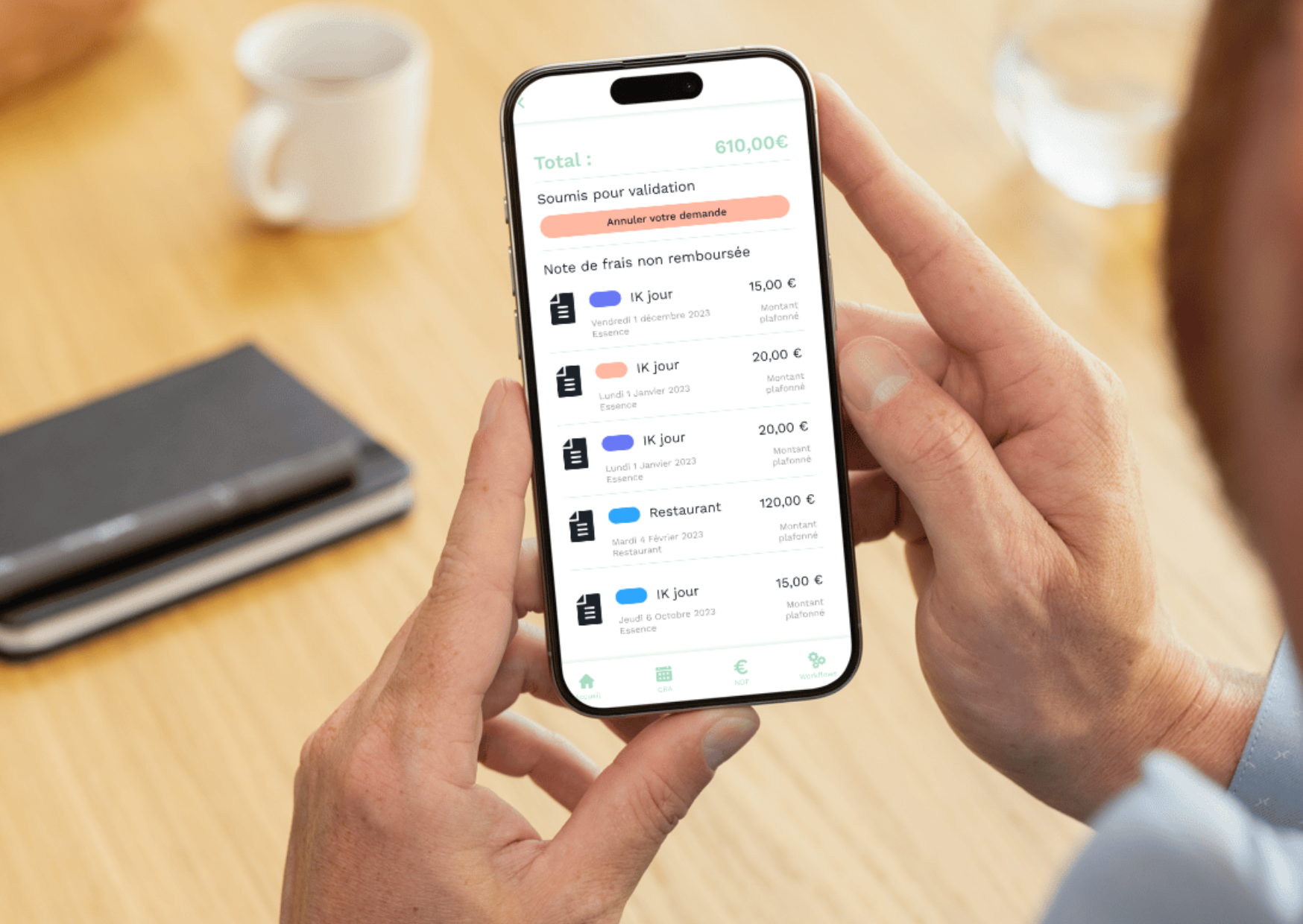
Implementing expense report management software will allow you to automate the various steps in the expense report process and will also:
- Reduce manual data entry, and therefore data entry errors.
- To improve the employee experience through technologies that streamline daily tasks, which are often time-consuming and provide no added value.
- More assiduous monitoring of business expenses.
- A time-saver for both the contractor and the manager.
VSP: Software for Managing Your Expense Reports Under Umbrella Employment
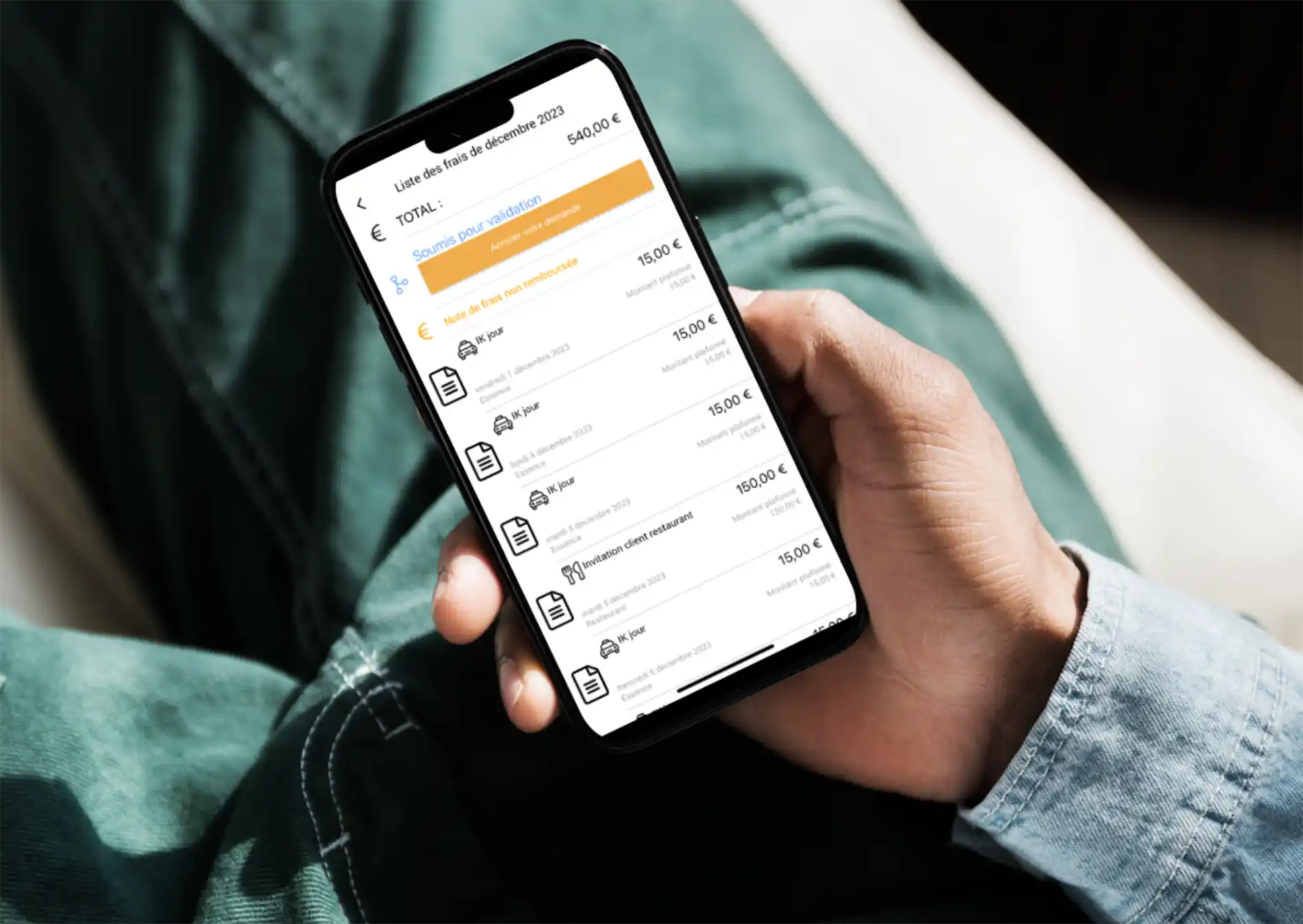
VSPortage is an ERP system designed to simplify the management of umbrella companies. Its expense report management module allows umbrella companies and their contractors to streamline the data entry and approval process through several features:
- Configuring expense types and limits.
- Submission of expense reports.
- Management of reimbursements and expense advances.
- Mobile app for maximum flexibility.
- OCR recognition of documents, available as an add-on. Optical character recognition allows you to automatically capture all the information on a document using your cell phone.
- Electronic signature for expenses.
- Charges to be billed to customers: You can pre-identify the charges to be included in customer invoices.
- Reporting: Track changes in business expenses per contractor using tracking charts.
If you still have questions about the benefits of an ERP system for your portage salarial company, read our comprehensive guide: Why Should I Implement an Industry-Specific ERP System in My Umbrella Company?
Are you ready to try out the VSPortage ERP to see how it can simplify the management of your umbrella company? Then schedule an appointment today to explore the solution’s features:
I would like to schedule a demo with a Veryswing expert
It’s free and there’s no obligation!