

Reading time: 9 minutes
Between assignments, consultants incur costs without generating revenue. But the gap between assignments isn’t just a financial burden. It’s also a pivotal moment for retaining—or losing—your top talent. Here’s how to manage it.
It is one of the most closely monitored metrics in IT service companies, and yet one of the least well-managed. The gap between contracts—also known as downtime or “the bench” in industry jargon—refers to the period during which a consultant has no billable work between client projects. The consultant remains an employee; their salary continues to accrue, but your company receives no revenue to offset this cost.
According to data from Syntec Numérique, the average downtime rate among digital services firms is around 12%. This means that at any given time, nearly one in eight consultants is waiting for an assignment. And according to an industry study reported by Philix, periods between contracts cost an IT services firm an average of between €8,000 and €15,000 per consultant per year.
But the gap between contracts isn’t just a financial issue. It’s also a high-risk period for retaining talent: a consultant who isn’t properly supported during this gap may be tempted to look for an assignment… elsewhere.
In this article, we explain how to prepare for the gap between contracts, manage it effectively when it occurs, and turn this challenging period into a tool for retaining your talent.
The Gap Between Contracts in IT Service Companies: Definition and Challenges
What is the “intercontract” period?
The gap between contracts is the period between the end of one assignment with a client and the start of the next. During this phase, the consultant returns to the company—either in person or remotely—without a billable project. The “intercontract” period is not a legal concept: it does not appear in the Labor Code but is governed by the Syntec collective bargaining agreement (IDCC 1486), which applies to virtually all French digital services companies.
Throughout the entire period between contracts, the consultant continues to receive his or her full salary. This creates financial pressure for IT services companies and consulting firms: payroll expenses continue without any corresponding revenue.
What is the appropriate threshold for the inter-contract rate?
The inter-contract rate is calculated as follows:
Inter-contract rate = (Days between contracts / Business days excluding holidays) × 100
The best-managed digital services firms aim for a rate below 5%. Above 10%, the impact on net margin becomes significant. Above 15–20%, the very viability of the company may be at risk, according to industry experts. By way of comparison, the industry averages around 10 to 15% of consultants’ total time spent without an assignment, or between 22 and 33 days per year.
What Does “1 Consultant Between Contracts” Actually Mean?
- A consultant with an average daily rate of €600 who is between contracts for 20 days represents €12,000 in uninvoiced revenue for that month alone.
- Statistically, it takes five consultants on assignment to cover the cost of a single consultant between assignments.
- At the IT service companies level: if 10% of your 50 consultants are on the bench for a month, that’s 5 resources that are costing the company money without generating revenue.
Why the gap between jobs occurs and how to prepare for it
The Main Causes
A gap between jobs is not inevitable, but it often results from a combination of several problems:
- A failure to plan ahead for the end of a project: when a sales representative waits until a contract has actually ended to figure out what comes next, it’s already too late.
- A misalignment between sales and recruitment: candidates are being hired who do not meet current client needs.
- Lack of visibility into available skills: without an up-to-date overview of candidate profiles, it is difficult to quickly place a consultant.
- Excessive reliance on a few clients or sectors: the loss of a major contract can lead to a sudden gap between contracts.
- A challenging economic environment: In 2024, the slowdown in the consulting market significantly lengthened the time between contracts at IT service companies, particularly in the banking and financial sectors.
Factors for Anticipation
The best way to reduce downtime between contracts is to anticipate it before it occurs. This involves closely monitoring your IT services KPIs, particularly the TACE (Activity Rate Excluding Vacation) and the projected workload plan.
- Monitor assignments ending within 30, 60, or 90 days: as soon as an assignment is set to end in less than 60 days, the sales representative should already be working on the next steps.
- Keep a skills map up to date: having a clear understanding of each consultant’s areas of expertise makes it possible to reassign them quickly.
- Diversify the client and industry portfolio: reducing dependence on a single client or industry automatically lowers the risk of a massive loss of business.
- Aligning Hiring with the Sales Pipeline: Only hire candidates based on their qualifications if the sales pipeline warrants their assignment within a reasonable timeframe.
How to Handle a Gap Between Jobs When It Occurs
No matter how much we plan ahead, downtime is an inherent part of the IT services provider model. The goal is not to eliminate it entirely, but to manage it systematically to minimize its financial and human costs.
From an operational standpoint
- Activate staffing immediately: Starting on the first day between contracts, the sales representative must have a potential assignment to offer. The goal: Never leave a consultant on the bench for more than two weeks without a concrete opportunity.
- Engage in value-added internal assignments: drafting sales proposals, R&D, contributing to internal projects, and participating in trade shows or tech events. The consultant should feel like they’re making a contribution, not just waiting around.
- Investing in training: The period between contracts is the ideal time to fund technical certifications or training in in-demand technologies. A consultant’s CPF, OPCO funds, and FAFIEC can be used to help finance part of these programs.
On a personal level
This is where many IT service providers fall short. A consultant facing a prolonged gap between contracts quickly begins to feel anxious, useless, and a loss of confidence. A Capgemini study identifies the psychosocial risks associated with prolonged gaps between contracts as a direct cause of increased turnover.
- Maintain regular contact: at least one weekly check-in with the manager or an HR representative. Don’t leave the consultant in the dark.
- Be transparent about timelines and efforts: the consultant needs to know that their employer is actively searching. Lack of transparency fuels anxiety.
- Involve the consultant in the search for an assignment: inform them of current opportunities and, when possible, allow them to choose from among several options.
The warning sign you shouldn’t miss
- A consultant who has been between contracts for more than four weeks with no concrete prospects is a consultant who has already started looking elsewhere.
- 80% of new hires decide whether to stay with a company within the first 6 months, and the “in-between” period often occurs during this critical window.
Use the inter-contract period as a customer retention tool
The IT service companies that best manage the gap between contracts have realized this: this period isn’t just a cost to minimize—it’s a relationship-building opportunity to be seized.
Show that your company invests in its consultants
A consultant who is offered a certification program, a challenging internal project, or an opportunity to develop new skills during a period of inactivity will walk away with a very different perception of their employer. This sends a strong message: the IT services company believes in them and is investing in their future, even when they aren’t generating revenue.
This directly contributes to retain your IT service company consultants and reduce turnover, which, according to Numeum, structurally hovers around 18 to 20% in the sector.
Build a strong connection with your consultants during this time of vulnerability
The gap between contracts is a period when consultants are more available, more receptive, and, unfortunately, more likely to consider other job offers. It’s also an opportunity to strengthen their sense of belonging to the company: team meetings, internal events, and get-togethers with other consultants. This time can serve as a catalyst for team cohesion.
Link Contract-to-Contract Work and Career Paths
A consultant who knows that periods between contracts will be used to develop their skills and advance their career has no reason to simply sit back and accept them passively. An IT services firm that offers a mid-term review, a skills assessment, and a look ahead at future assignments transforms the gap between contracts into a stage of professional development.
This connection between periods between contracts, training, and career advancement is also a powerful selling point in yourconsultant onboarding strategy : explaining it right from the recruitment stage lays the foundation for a lasting relationship built on trust.
Best Practices Observed in High-Performing IT Service Companies
- Systematically offer an “express skills assessment” at the start of the period between contracts to help guide training choices.
- Create an internal assignment system with deliverables and evaluations to ensure a meaningful contribution.
- Celebrating the certifications earned during the gap between contracts in front of the entire team sends a strong cultural message.
- Send a personalized weekly update on current sourcing projects.
How Industry-Specific ERP Reduces Downtime Between Contracts and Improves Management
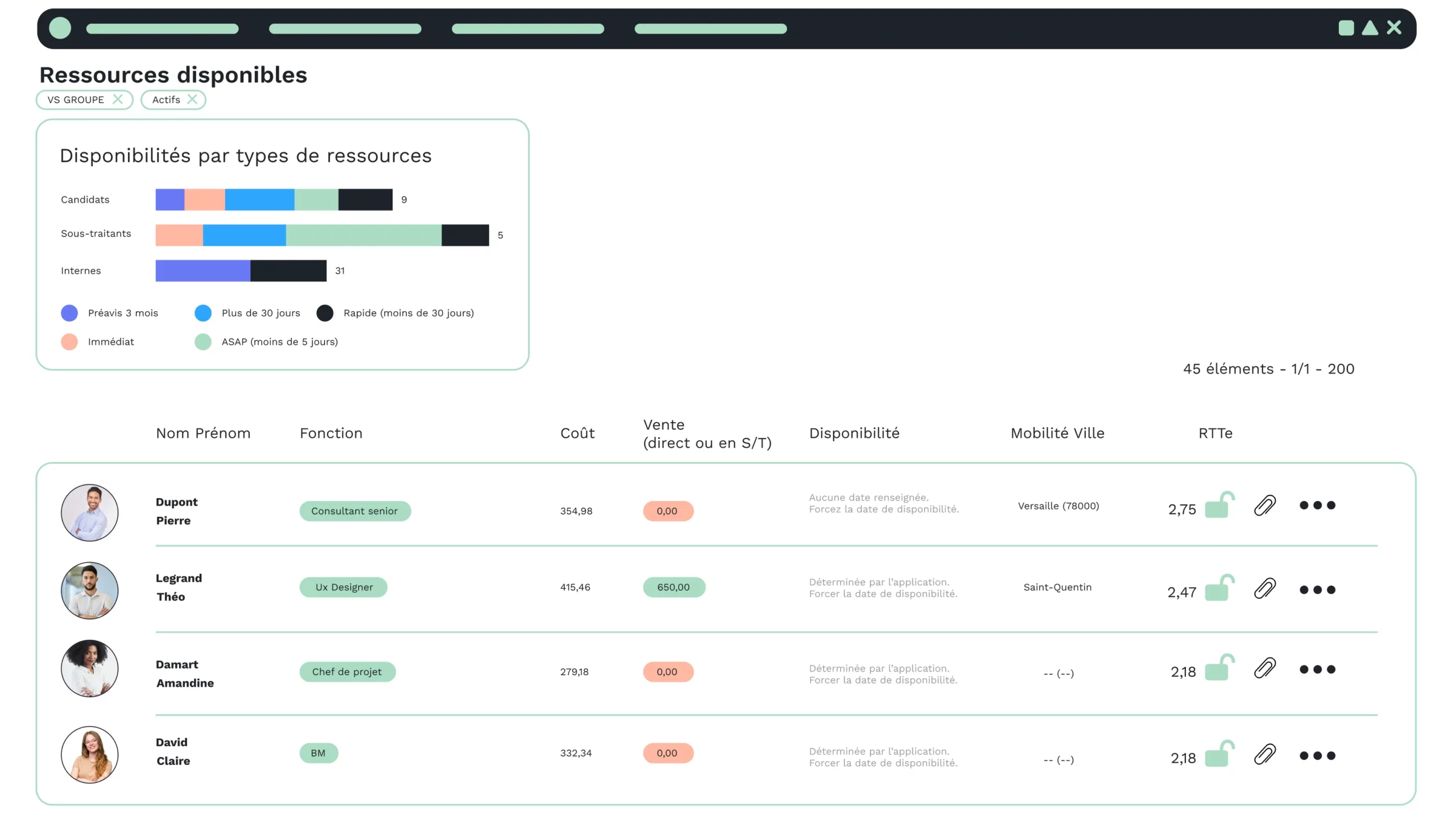
Managing the gap between contracts hinges on one essential prerequisite: having real-time visibility into workload schedules, available skills, and upcoming project end dates. Without these tools, sales representatives are flying blind and only discover gaps between contracts at the last minute.
What an ERP system from an IT service company actually offers
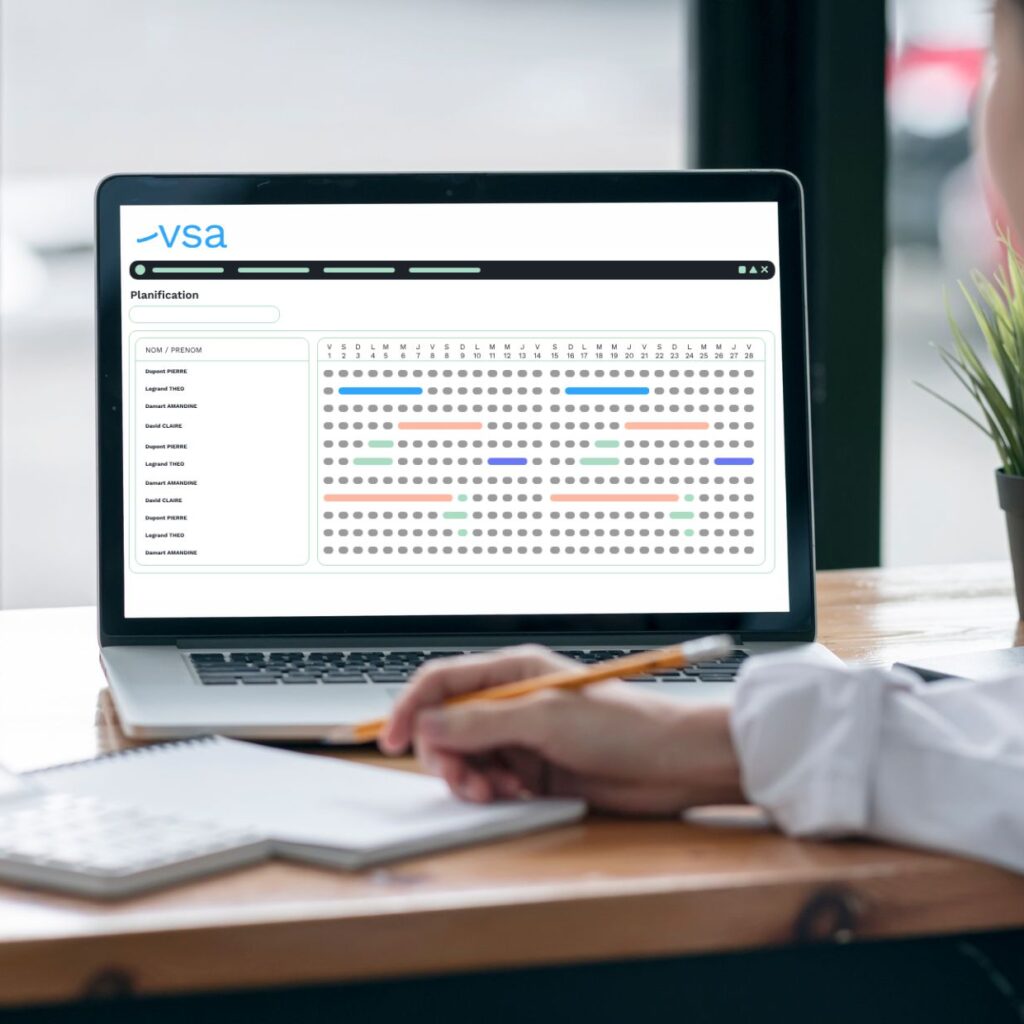
- Viewing 30-, 60-, and 90-day workload forecasts: identify in advance which consultants will become available and when.
- Real-time, up-to-date skills mapping: know exactly who can handle what type of assignment, without having to exchange emails.
- Automatic alerts for task completion: The sales representative is notified as soon as a task nears completion, with a configurable lead time.
- Tracking the activity rate (TACE) by consultant, by team, and by entity: a centralized dashboard for managing operational performance in real time.
- Tracking Training and Certifications: Plan and track skill development achieved during periods between contracts.
This level of control is possible with an IT service companies designed to meet the specific needs of service companies.
Reduce downtime with the VSActivity ERP system
VSActivity is the SaaS ERP designed for digital services firms and consulting firms. It gives you real-time visibility into workload schedules, available skills, and project completion dates. This ensures that you can actively manage the period between contracts, rather than simply enduring it:
- Your sales and HR teams share the same database
- Alerts are automatic
- The utilization rate (TACE) is continuously tracked by consultant, by team, and by entity.
To explore VSActivity’s features, schedule a free demo.
FAQ – Frequently Asked Questions About the Inter-Contract Period at IT Service Companies
What is a gap period between contracts at IT service companies?
The “intercontract” (or “intermission”) is the period during which a consultant at an IT services company has no billable assignment with a client. They remain full-time employees and continue to receive their full salary, but do not generate any revenue for their employer. This period is inherent to the IT services firm model and is governed by the Syntec collective bargaining agreement (IDCC 1486).
What is an acceptable rate of time between contracts at IT service companies?
The best-managed digital services companies aim for an inter-contract rate of less than 5%. The industry average ranges between 10 and 12%, according to Syntec data. Above 15%, the impact on profitability is significant. A 0% rate is theoretically impossible and even undesirable, as it would mean maximum strain on resources with no room for maneuver.
Can a consultant be terminated during a gap between contracts?
No, a gap between contracts is not a valid reason for termination. The consultant retains all of his or her rights as an employee. However, the employer may proceed with a layoff for economic reasons if the legal conditions are met (proven economic difficulties, compliance with the procedure), but this scenario is strictly governed by the Labor Code and the Syntec collective bargaining agreement. The employer may also require the consultant to take leave during the gap between contracts, provided sufficient advance notice is given.
How can you effectively keep a consultant busy between contracts?
There are several ways to make the most of the period between contracts: funding certification courses (CPF, OPCO, FAFIEC), assigning value-added internal projects (R&D, sales copywriting, open-source contributions), organizing technology watch sessions, or having the consultant participate in industry events or skills-based pro bono initiatives. The key is for the consultant to feel useful and engaged, not passively waiting.
How does an ERP system help reduce downtime between contracts at IT service companies?
An industry-specific ERP system like VSActivity allows you to anticipate the end of assignments through automatic alerts, view 30-, 60-, and 90-day workload forecasts, map available skills in real time, and track the utilization rate (TACE) by consultant and by team. This visibility enables sales teams to take action before a gap between contracts begins, rather than reacting after it has started.