

Reading time: 15 minutes
IT services companies and Consulting Firms primarily sell intellectual service time and expertise. Their business model relies on accurately valuing billable days, managing the period between contracts, monitoring profitability on a per-project basis (assignments and projects), and a high-performance, reliable billing system to optimize cash flow. These are specific needs that a general-purpose ERP system does not natively address.
This comparison reviews 8 ERP systems for IT services companies available on the French market in 2026 (Akuiteo, AliBeez, Boond, Everwin SX, Fitnet, Karanext, Stafiz, and VSActivity) based on objective and verifiable criteria: functional coverage, integrations, ISO 27001 certification, compliance with the Approved Electronic Invoicing Platform, umbrella employement management, pricing, ease of use and usability, and solution configuration and deployment.
The solutions are listed in alphabetical order.
This article complements our page dedicated to ERP for IT services companies, as well as our guides on criteria for choosing an ERP system for a services company and on the choice between general-purpose ERP and industry-specific ERP. Check them out for a comprehensive selection methodology. This comparison focuses on a factual side-by-side analysis of nine solutions available on the market.
Why a General-Purpose ERP System Isn’t Enough for IT services companies
A general-purpose ERP system handles billing and accounting but generally does not account for the industry-specific and operational nuances of the business sector: tracking KPIs (Activity Rate Excluding Leave / Activity Rate including Leave, Average Daily Rate, Average Daily Cost, etc.), managing the period between contracts, and handling both time-and-materials and fixed-price billing methods…
This is why there is a separate category of “business-specific” ERP systems designed for IT services companies and engineering companies.
Key Criteria for Choosing an ERP System Provided by IT Services Companies in 2026
Before comparing publishers, here are the criteria you should always evaluate:
- Activity Report: Online entry of activities by the engineer or consultant, an approval workflow, and—ideally—electronic signatures, with automatic generation of time-and-material invoices and calculation of work output for fixed-price contracts.
- Automatic calculation of business metrics, particularly Activity Rate Excluding Leave and Activity Rate Including Leave: these two operational profitability metrics must be calculated directly from the validated activity reports, without manual export to a spreadsheet.
- Time-and-materials and fixed-price billing: Both methods must coexist within the same tool, with tracking of progress and, consequently, of the remaining work to be completed for the fixed-price project.
- Staffing and gap management: tracking the availability of resources (engineers, consultants, subcontractors) to anticipate the end of assignments and minimize periods of inactivity.
- Electronic Invoicing Compliance and Approved Platform : The solution must support the issuance of invoices in a structured format (Factur-X, in particular). The ability to receive purchase orders is also a plus, as a subcontractor incurs a financial expense when issuing an invoice, which is useful for tracking the profitability of the assignment or project on which the subcontractor is working.
- HR and recruitment modules: time off , expense reports, contracts, onboarding, and candidate tracking—all natively integrated to avoid duplicate data entry.
- Payroll outsourcing: This is now a key consideration for IT services companies and ICT firms that also manage employees through umbrella employement in order to retain projects. Few software vendors support this natively.
- ISO 27001 certification: a guarantee of data processing security, which is closely scrutinized by major clients.
Summary Comparison Table of 8 ERP Systems for IT services companies
| Solution | ISO 27001 | Compatible with electronic billing | Functional Coverage | Native Management of Umbrella Employment | Configuration and Deployment | Estimated Price |
| Akuiteo | ❌ No | ⚠️ Non-native (via partner jefacture.com) | 🚀 Time tracking & activity report. Financial and accounting management. Multi-company management. ⚠️ HR & Staffing | ❌ No | ⚠️ Long implementation time | Starting at €4,000/month (<79 employees) or upon request |
| AliBeez | ❌ No | ⚠️ Non-native (via iopole partner) | 🚀 Package Management. Tracking Work in Progress. Multi-company and Multi-currency Management ⚠️ CRM and HR Module | ❌ No | ⚠️ Complexity of configuration | Unconfirmed |
| Boond | ✅ Yes | ⚠️ Non-native (via B2B routing partner) | 🚀 Recruitment and CRM ⚠️ HR Module and Reporting | ❌ No | ✅ Quick setup and configuration | Starting at €59 per manager per month + €4 per employee per month |
| Everwin SX | ✅ Yes | ⚠️ Non-native (via Clear’Invoice partner) | 🚀 Multi-entity and multi-currency management. Financial consolidation. Outsourcing ⚠️ HR management and recruitment | ❌ No | ⚠️ Complex setup and use | Based on a quote |
| Fitnet | ✅ Yes | ⚠️ Non-native (via iopole partner) | 🚀 Staffing. Real-time profitability tracking ⚠️ Reporting. CRM and recruitment modules. | ❌ No | ✅ Rapid deployment and highly flexible configuration | Starting at €10 per collaborator per month (excluding CRM and Purchasing) |
| Karanext | ❌ No | ⚠️ Non-native (via Esalink partner) | 🚀 Built-in automatic lettering. Fixed-price project management ⚠️ Sourcing | ❌ No | ✅ Rapid deployment | €3.85 per collaborator per month, starting at €35 per manager per month |
| Stafiz | ❌ No | ⚠️ Non-native (via Iopolel partner) | 🚀 Staffing, real-time margin management ⚠️ CRM and pre-sales module, ATS | ❌ No | ⚠️ Necessary support for change | Based on a quote, ~€19 per user per month on average |
VSActivity (Veryswing) | ✅ Yes | ✅Yes – registered as an Approved Platform for E-invoicing directly with the DGFIP (No. 0106) and as a Peppol Access Point | 🚀Comprehensive coverage, electronic invoicing, umbrella employement management, and HR module ⚠️ The CRM component is less advanced than a dedicated CRM system | ✅Yes | ✅ Powerful configuration and quick startup | From €4 to €10 per user per month, depending on the size of the company |
Data from Veryswing’s internal survey (August 2026), cross-referenced with publicly available information from publishers (official websites, Capterra listings). The notation “unconfirmed” indicates that the information was not publicly available at the time of writing; please verify this directly with the relevant publisher before making any purchase decision.
A Closer Look at the 8 ERP Systems for IT Services Companies
Akuiteo
Akuiteo is a French software provider founded in 2007, designed specifically for service and consulting firms. The solution natively integrates CRM, project management, time tracking, billing, and accounting into a single interface, with support for electronic invoicing compliance.
Strengths
- Real-time tracking of activities and streamlined activity report approval
- Suitable for multi-company environments
- Native Financial and Accounting Management
Points to Watch For
- Compact Ergonomics
- Solution Implementation Time
- Fewer HR features than other vendors on the market
- Not very flexible when it comes to staffing
Who is it for? IT services companies mature with 20 to 300 employees seeking a proven business solution.
AliBeez
AliBeez is a French software company founded in 2014 whose SaaS ERP is designed for IT services companies, consulting firms, and engineering companies. The solution offers CRM, HR management and recruitment tracking, management of activity reports and expense reports, and invoicing.
Strengths
- Package Management, Tracking Remaining Work
- Multi-Currency Management
- Employee onboarding integrated into the HR process
- Dynamic workload planning and automatic matching via activity reports
Points to Watch For
- Complexity of configuration during startup
- Some users consider the user interface to be outdated (limitations on multi-tab browsing)
- Too rigid, or even unsuitable for the (resale) of equipment and licenses.
- The CRM and HR modules are less advanced than those of other vendors on the market
Who is it for? Medium- to large-sized IT services companies seeking a specialized tool for staffing and managing periods between contracts.
BoondManager
Founded in 2009, BoondManager (now Boond) is one of the most established players in the French ERP market for IT services companies. It covers the CRM cycle, recruitment, assignments, activity reports, expense reports, and invoicing.
Strengths
- A 100% open and well-documented API that facilitates third-party integrations
- An interface designed like a consumer-facing web app, with quick setup and configuration
- Easy-to-Use Recruitment and CRM Modules
- User Community and Partner Ecosystem
Points to Watch For
- Limited reporting and financial oversight
- ERP system that is not very customizable to fit internal processes
- Limited HR module
- Rapid increase in costs due to the expansion of the sales and HR teams
Who is it for? Mid-sized IT services companies seeking an agile solution that is open to the ecosystem and well-integrated with third-party tools.
Everwin SX
A long-standing player since 1993, Everwin is an ERP system available in SaaS (SX) or on-premise (GX) modes, serving a broad range of industries: design firms, engineering, construction, architecture, IT services companies, and consulting firms. This sector-wide versatility makes it a general-purpose tool for service companies rather than pure-play IT services companies. Its features include sales tracking with a CRM, management of activity reports and expenses, project tracking, invoicing, and finance.
Strengths
- Ideally suited for engineering firms and architectural firms
- Native multi-entity and multi-currency management, advanced financial consolidation
- External Contracting Management: Timesheets, Purchase Invoices
- Partner Ecosystem
Points to Watch For
- Outdated interface
- Complexity of setup and use
- Not well suited for small and medium-sized organizations: too much investment and too much to learn
- Limited HR and recruitment features
Who is it for? Established medium- and large-sized IT services companies seeking a mature solution with rigorous financial consolidation.
Fitnet Manager
Marketed since 2008 by the software publisher BSA (Business & System Architects), Fitnet Manager (now Fitnet) is one of the first French SaaS ERP solutions designed specifically for IT services companies.
Strengths
- Numerous modules (Gantt, variable compensation, intercompany transactions, etc.)
- Advanced Staffing Management
- Rapid deployment and flexible configuration
- Real-time profitability with a comparison of planned vs. actual results
Points to Watch For
- High entry costs for small IT services companies
- The interface is considered less modern than that of some newer competitors
- Limited customization options for reporting in the standard version
- Limited CRM and recruitment modules
Who is it for? Mid-sized IT services companies seeking a proven, highly modular solution with a high level of regulatory compliance.
Karanext
Founded in 2018, Karanext is the newest software provider in this comparison. With a modular approach (ERP, CRM, HR, and Recruitment modules that can be activated on an à la carte basis), it emphasizes a high level of automation and granular pricing.
Strengths
- Granular and modular pricing, designed for gradual scalability
- Integrated electronic signature and automatic text generation
- Modern interface, rapid deployment
- Detailed management of fixed-price projects and automatic calculation of Activity Rates
Points to Watch For
- Less suitable for large IT services companies (500+ employees)
- A more limited ecosystem of third-party integrations compared to established players
- Sourcing is less powerful than other ERP systems
Who is it for? IT services companies looking for a modern, modular tool that can be deployed quickly.
Stafiz
Stafiz (founded in 2016) positions itself as a PSA (Professional Services Automation) platform rather than a traditional ERP system, with a strong focus on forecasting and multi-criteria staffing scenarios.
Strengths
- Multi-criteria staffing scenarios and impact simulation prior to decision-making
- Real-Time Margin Management
- Multi-country coverage, useful for IT services companies with an international presence
- Automated billing based on validated activity report data
Points to Watch For
- May seem too large for a small organization
- Lack of charts and visuals in the reports
- More Streamlined CRM and Pre-Sales Modules
- Recruitment Module (ATS) Not Well Suited for Large-Scale Hiring
Who is it for? IT services companies of medium to large size looking to replace multiple tools with a unified platform featuring predictive analytics.
VSActivity (Veryswing)
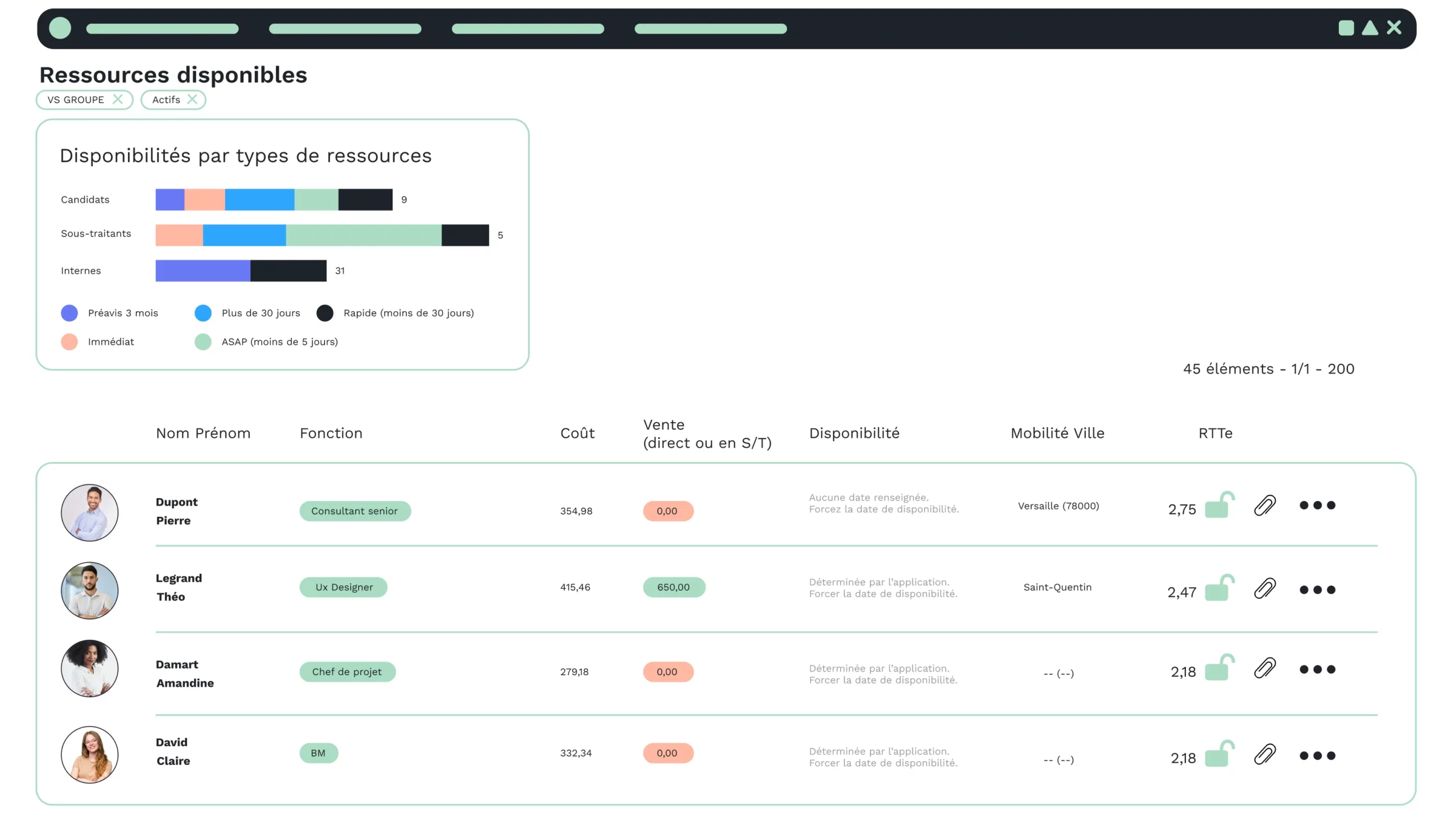
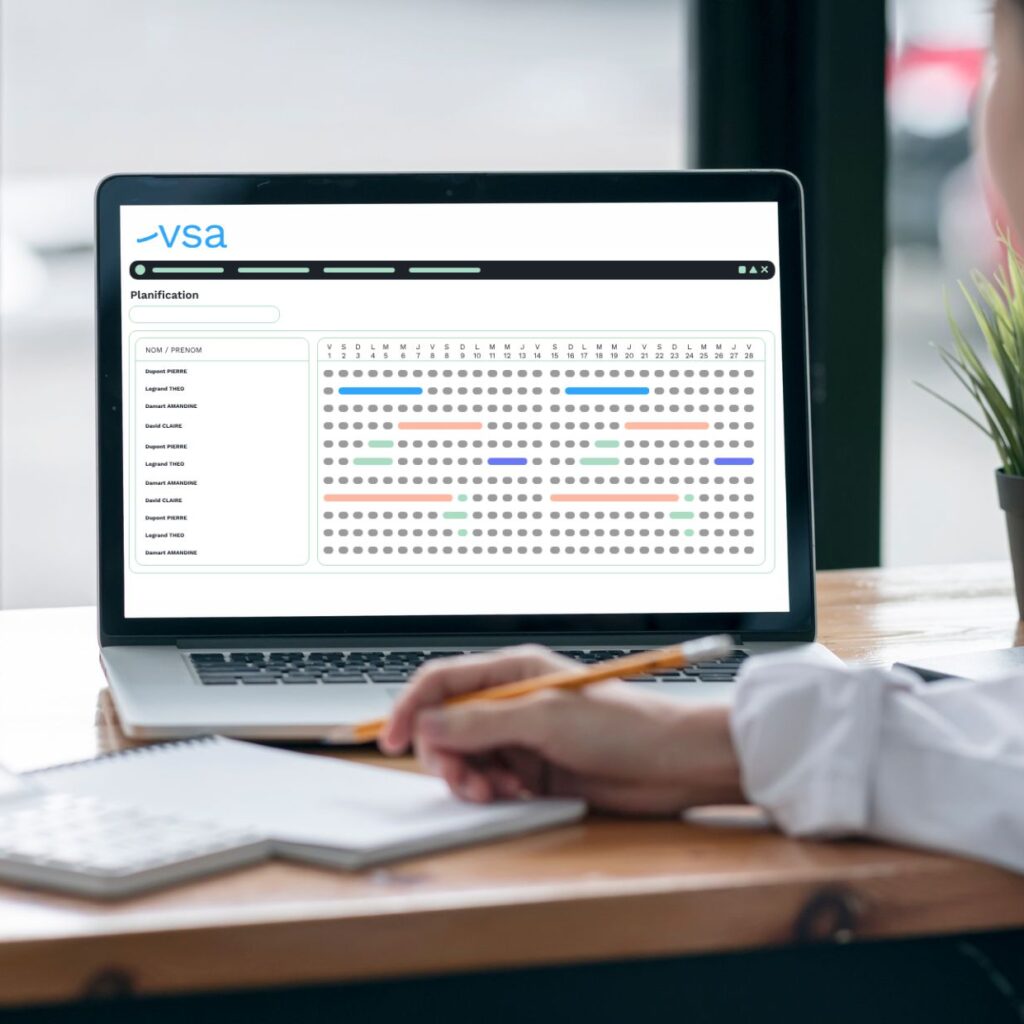
Veryswing, a French software company founded in 2012, offers its VSActivity ERP (also known as vsa), which covers the entire project lifecycle for IT services companies and consulting firms: CRM, staffing, time tracking (activity report) and expense reports, HR and recruitment, billing and finance—all without duplicate data entry across modules. A dedicated mobile app (MyVS) is available for consultants and subcontractors to track their time.
Strengths
- Comprehensive, integrated functionality: CRM → staffing → activity report → expense reports → billing, with no need for re-entry
- Powerful and flexible configuration options for a quick and customized setup
- Native umbrella employement module
Points to Watch For
- Less suitable for highly advanced financial consolidation
- The mobile app is more limited than the web version: it is primarily designed for consultants and technical staff to track time (activity report), absences, and expenses
- A CRM module is less advanced than a dedicated CRM tool
Who is it for? IT services companies of all sizes—from very small businesses to mid-sized companies with several thousand employees—looking for an all-in-one solution that will adapt to their organization and situation (startup, external growth, multi-company structures, international operations, etc.), with native electronic invoicing compliance and rich, integrated reporting.
How to Choose an IT Services Company ERP System Based on Your Company’s Size and Business Model
Fewer than 50 consultants: The priority is on rapid deployment and simplicity. Karanext, VSActivity, or Fitnet (entry-level plan) meet this need without requiring excessive investment.
From 50 to 300 consultants: organizational structure becomes critical. This requires native integration between CRM, HR, staffing, and billing systems to avoid duplicate data entry. Akuiteo, Boond, and VSActivity serve this segment well.
With more than 300 consultants across multiple entities—Everwin SX, AliBeez, and Stafiz offer more advanced financial consolidation and multi-currency management.
Umbrelling services offered alongside IT services companies: a criterion that automatically eliminates most of the solutions in this comparison. VSActivity, through its umbrella employement module, is the only solution that natively supports this feature. BoondManager partially supports it through various modules.
Multilingual: Stafiz tands out with support for five languages and coverage across multiple countries. Other solutions, such as VSActivity, also address this need (editable documents and a web interface available in multiple languages).
Frequently Asked Questions – Choosing an ERP System for IT Services Companies
What Is an ERP System for IT Services Companies?
An ERP (enterprise resource planning) system for IT services companies is a central software platform that integrates project management, time tracking, billing, human resources, and accounting. It is used to manage IT consulting or development activities from start to finish.
Why does an IT services company need a specific ERP system?
A general-purpose ERP system cannot meet all the specific functional needs of IT services companies, such as project management, tracking consultants’ time, or managing subcontractors. By choosing an industry-specific ERP system designed for IT services companies, you avoid having to customize the ERP and thus gain better control over costs and implementation timelines.
What is the best ERP system for IT services companies in 2026?
There is no one-size-fits-all answer: the right choice depends on the size of the organization, the predominant billing model (time-and-materials, fixed-price, or a combination), and related needs such as umbrella employement or multi-entity management. IT services companies that also offer umbrella employement services will turn to solutions that natively support this, such as VSActivity. Large IT services firms with financial consolidation needs will favor providers like Everwin SX. Small, fast-growing firms will instead look to modular solutions such as Karanext.
Is there an ERP system for IT services companies that includes a natively integrated umbrella employement module?
Among the solutions compared here, VSActivity is the only one to offer a native umbrella employement outsourcing module. BoondManager partially addresses this need through add-on modules; the other vendors (Karanext, Fitnet Manager, Stafiz, Akuiteo, Everwin SX, AliBeez) do not natively include this feature.
What is an Approved Platform, and why is it a key factor in making a choice?
An Approved Platform is an intermediary authorized to transmit electronic invoices as part of France’s electronic invoicing reform. Some ERP systems integrate an Approved Platform directly (as is the case with VSActivity and the Veryswing Approved Platform). Others rely on a partnership with a third-party Approved Platform (Boond, Karanext, Fitnet Manager, Everwin SX, Stafiz, Akuiteo). In both cases, compliance is ensured, but direct integration generally simplifies configuration and support in the event of an incident. By 2030, all European countries will be required to use electronic invoicing.
ERP or PSA (Professional Services Automation): What’s the Difference for IT services companies?
An ERP system covers all aspects of business management (finance, HR, billing, CRM). A PSA, such as Stafiz, focuses more on the operational management of projects and resources, with a strong emphasis on forecasting. In the IT services companies sector, the line between the two categories has largely blurred: most of the solutions featured in this comparison combine both approaches.
In summary
The choice of an ERP system for IT services companies depends primarily on three factors: the size of the organization, the predominant billing model ( time and materials, fixed-price, or a combination), and additional requirements such as multi-entity management or umbrella employement. Established vendors (Everwin SX, Fitnet) offer the reassurance of a proven track record but require a more substantial implementation investment. Newer players like Karanext focus on rapid deployment but are more limited in terms of functionality. Predictive solutions (Stafiz) are aimed at IT services companies that are already mature in their operations management.
The business solution designed specifically for IT services companies
For IT services companies seeking to cover the entire CRM → staffing → activity report → billing cycle in a single tool, with direct PA compliance and, if applicable, umbrella employement services to be managed within the same environment, VSActivity is one of the few solutions on the market that natively checks all these boxes.