

Reading time: 10 minutes.
The ERP market is full of offerings, and it can be complex for companies to find the right ERP software for their needs and expectations.
Which ERP should a service company choose? What criteria should be considered? Should it be a SaaS or on-premises ERP?
If you want your business processes to be automated and your information system to be unified, you’ll need to find the answers to these questions quickly.
Whatever the size of your company, implementing ERP software is an important decision which involves taking into account your company’s resources and the criteria of your business sector.
One of the primary benefits of an ERP system for a service company is its ability to centralize information and facilitate decision-making. With a consolidated view of projects, resources, and billing, it becomes easier to manage day-to-day operations.
An ERP solution is management software that will support your company’s development for many years to come, so you need to make the right choice.
In this article, we’ll outline the criteria to consider when selecting an ERP system designed for service companies.
The Challenges of Implementing an ERP System for a Service Company
Following the post-COVID euphoria, the IT services companies market saw moderate growth of 2% in 2025. Numeum forecasts that market growth will accelerate to 4.3% in 2026.
In this context, to remain competitive, a service company must:
- Expand its customer base to gain new market share and increase turnover;
- Optimize organizational efficiency through more agile and fluid business processes, and increase productivity by eliminating time-consuming, non-value-added tasks;
- Stand out in the market by offering new services;
- Improve internal management processes ;
- And above all, to develop customer relations.
To address these challenges, companies are focusing on cybersecurity, data, artificial intelligence, and the cloud.
In fact, the cloud enables service companies to take advantage of SaaS-based IT solutions to support their growth more quickly and easily. Among these solutions is the integrated management software package (PGI), also known by its English acronym ERP (Enterprise Resource Planning).
Through this IT solution, a service company seeks to closely monitor its business activity while improving internal processes.
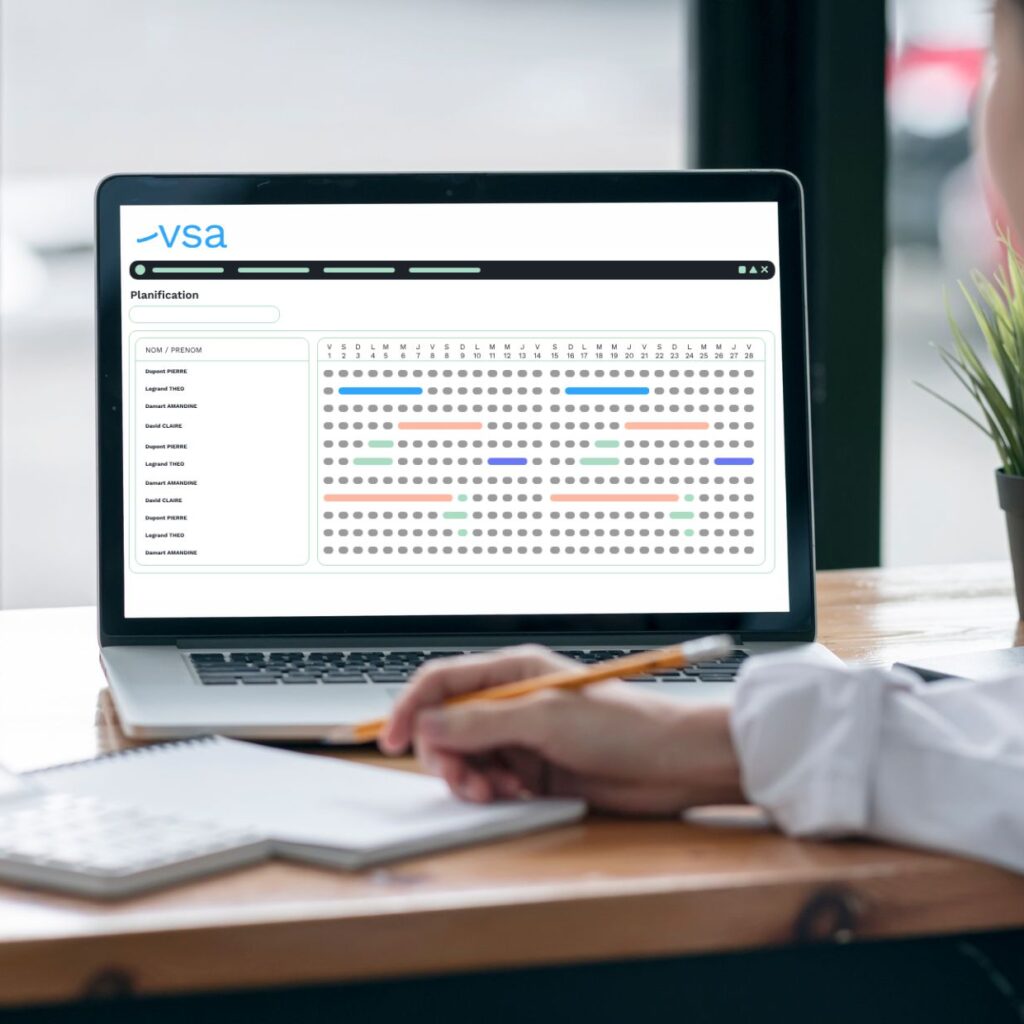
Key elements for these companies include schedule management, team staffing, and activity reporting. These processes can quickly become complex as the company grows, and a properly configured ERP system can automate many of them while ensuring full traceability of actions.
Why choose ERP?
As mentioned above, Consulting and Services companies want to better monitor their activities and improve their internal processes.
It is precisely in this context that an ERP solution is effective.
Enterprise resource planning (ERP) is a business management solution that enables companies to meet their strategic and operational challenges, in particular by :
- Forecasting indicators for their business;
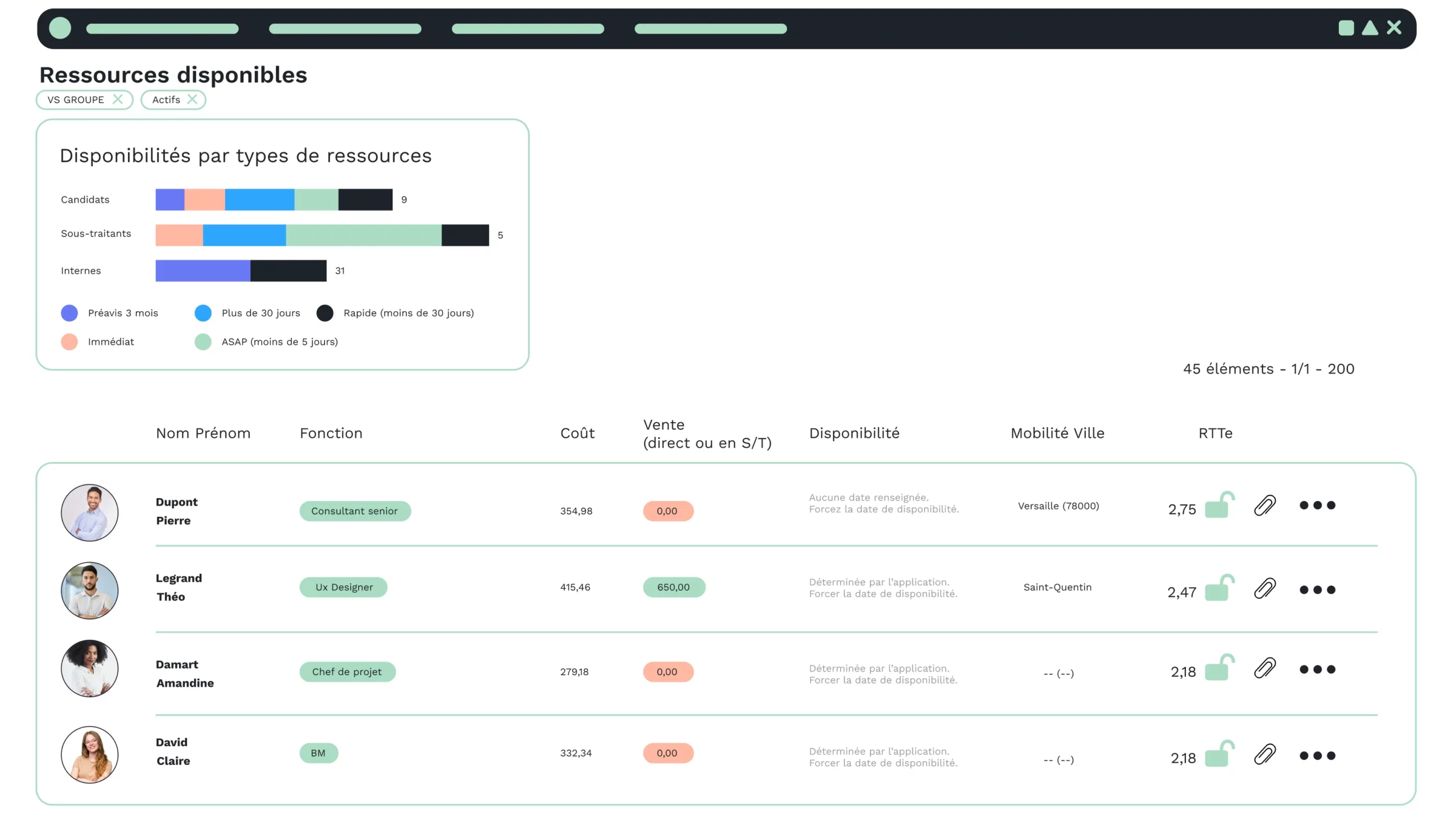
- Manage internal and external resources and skills;
- A real-time view of all their activities;
- Combine operational project management with financial business management;
- Manage technical sales information and documents;
- Operational visibility by project or mission;
- Reduce the number of employee inter-contracts.
A well-chosen ERP system also simplifies project billing by automating the generation of invoices based on time spent. This automation helps ensure the reliability of accounting processes and minimizes human error.
In short, an ERP system’s performance depends on its ability to adapt to the specific needs of the company’s business and to deliver tangible gains in productivity, visibility, and service quality.
Criteria to consider when choosing an ERP system for a service company
General or specific?
You’ll find a wide range of ERP-type business management software on the market. Some are generalist, others more specific to the Consulting and Service professions.
We advise you to opt for a solution specific to service companies, as this type of enterprise software takes into account the particularities of your business, such as business management and time recording (CRA, etc.).
An industry-specific ERP system, designed for service companies, natively integrates tailored modules such as assignment management, consultant management, expense report management, and the automation of administrative tasks.
Functional coverage
You need to identify the key features you’ll need to achieve your goals and meet your requirements. This could be business management, to meet the specific needs of your market; sales management, for better management of your relationships with your customers and prospects; reporting and dashboards, to have access to key indicators of your activity, etc.
Make sure your ERP system also allows for detailed scheduling and staffing management, with features for viewing availability, allocating resources, and tracking workload by profile or assignment.
Safety
You must also ensure the security of your data; that is why your software provider must provide you with assurances regarding its ability to ensure the security of that data.
These may include certifications, recognitions, authentication, data encryption, etc.
Compliance with standards such as ISO 27001 and the implementation of strong authentication mechanisms (SSO, MFA) are essential factors to consider when making your selection.
Compliance with regulatory requirements
Regulations are constantly changing, and it can be difficult to keep up. Having an ERP solution whose functionalities meet regulatory requirements is an asset.
This may apply to official documents (invoices, etc.), the GDPR, etc.
A compliant ERP system makes it possible, among other things, to archive documents in accordance with legal retention periods, track access to personal data, and manage user consent.
Solution scalability
As your business grows, so will your needs. Make sure you choose a scalable solution that can keep pace with your growth. Whether in terms of user numbers or functionality.
A best practice is to review the vendor’s roadmap: planned future updates, upcoming innovations, and the ability to integrate with complementary tools.
Services offered by the publisher
Identify the services the vendor offers to support the deployment of the business management tool. Does the vendor offer training? Webinars? Do they provide support throughout the various stages of the project, particularly during configuration and launch?
High-quality support is often the key to a successful deployment. Having a dedicated project manager or responsive technical support can make all the difference.
Ergonomics
The enterprise resource planning (ERP) software should be easy to learn —both to make it more user-friendly and to facilitate faster implementation.
Test the solutions you’ve chosen to appreciate the proposed ergonomics and make a decision. Ask the editor for a demonstration.
An intuitive interface allows users to quickly get up to speed with the tool, thereby reducing the need for training and maximizing efficiency from the very first weeks of use.
The cost
You’ve found the perfect solution for all your needs. Now, do you have the budget?
This is an essential question, because you risk wasting time on a solution that may not be within your reach. And time is money.
The cost of an ERP system must be analyzed: include licensing or subscription fees, maintenance costs, training, and support. Also consider the expected ROI, based on the savings from task automation and improved management.
ERP solution interoperability
Do you need the solution to interface with other applications? For example, for payroll, job advertisements, etc.
Good interoperability also makes it possible to integrate the ERP with BI tools to enhance business reporting or with an ATS to streamline the recruitment process.
To conclude on the criteria to consider for an ERP dedicated to consulting firms and service companies
Implementing Enterprise Resource Planning within a service company enables it to meet a number of fundamental development needs.
Whether it’s the accessibility of KPIs (key performance indicators), the management of human and financial resources, real-time vision, and so on.
The management software package will help coordinate all the service company’s strategic business units to increase its competitiveness.
But you still need to choose the right ERP solution? There are many ERPs on the market, and making the right choice can be complex.
To make the right choice, a service company needs to consider its market, its needs and its resources.
Drawing up ERP specifications can help you assess needs and expectations.
In all cases, the software package must be flexible to support the company’s growth, and integrate reporting functionalities for analytical needs.
Demos and trials should be carried out before the choice is made, to better appreciate the experience offered by each of the solutions studied.
In summary, the criteria for selecting an ERP system for a service company should not be based solely on functionality. It is a long-term strategic decision that directly impacts the performance of the ERP system and the organization as a whole. A good ERP system helps align business processes with the company’s business objectives.
Manage Your Service Business with VSActivity
Choosing an ERP system tailored to a service company is a strategic decision that supports growth, streamlines operations, and boosts productivity. That’s exactly what VSActivity offers—our ERP software specialized for the consulting, service, and engineering industries.
Centralize all of your operational management
With VSActivity, you get an all-in-one solution designed to meet the demands of your industry:
-
Detailed management of your projects, from planning to billing
-
A CRM and reporting tools for sales management
-
Tracking time, absences, and activities
Automate your processes and improve your ERP’s performance
VSActivity automates time-consuming tasks, allowing you to focus on what matters most:
-
Invoice Automation
-
Resource and Skills Management
-
Quick implementation of key metrics through integrated dashboards
Why Choose VSActivity for Your Service Company?
Choosing VSActivity means opting for an ERP system designed to address the challenges faced by service companies:
-
Gain greater agility and visibility into your projects
-
Improve collaboration among teams and the quality of planning
-
Meeting business needs through comprehensive functional coverage
-
Build your business around a tool that can grow with you
VSActivity also helps you develop clear requirements to guide your decisions and implement a high-performance, interconnected ERP system that complies with regulatory requirements.
Request your free demo today and discover how VSActivity can transform your project management, from planning to reporting.