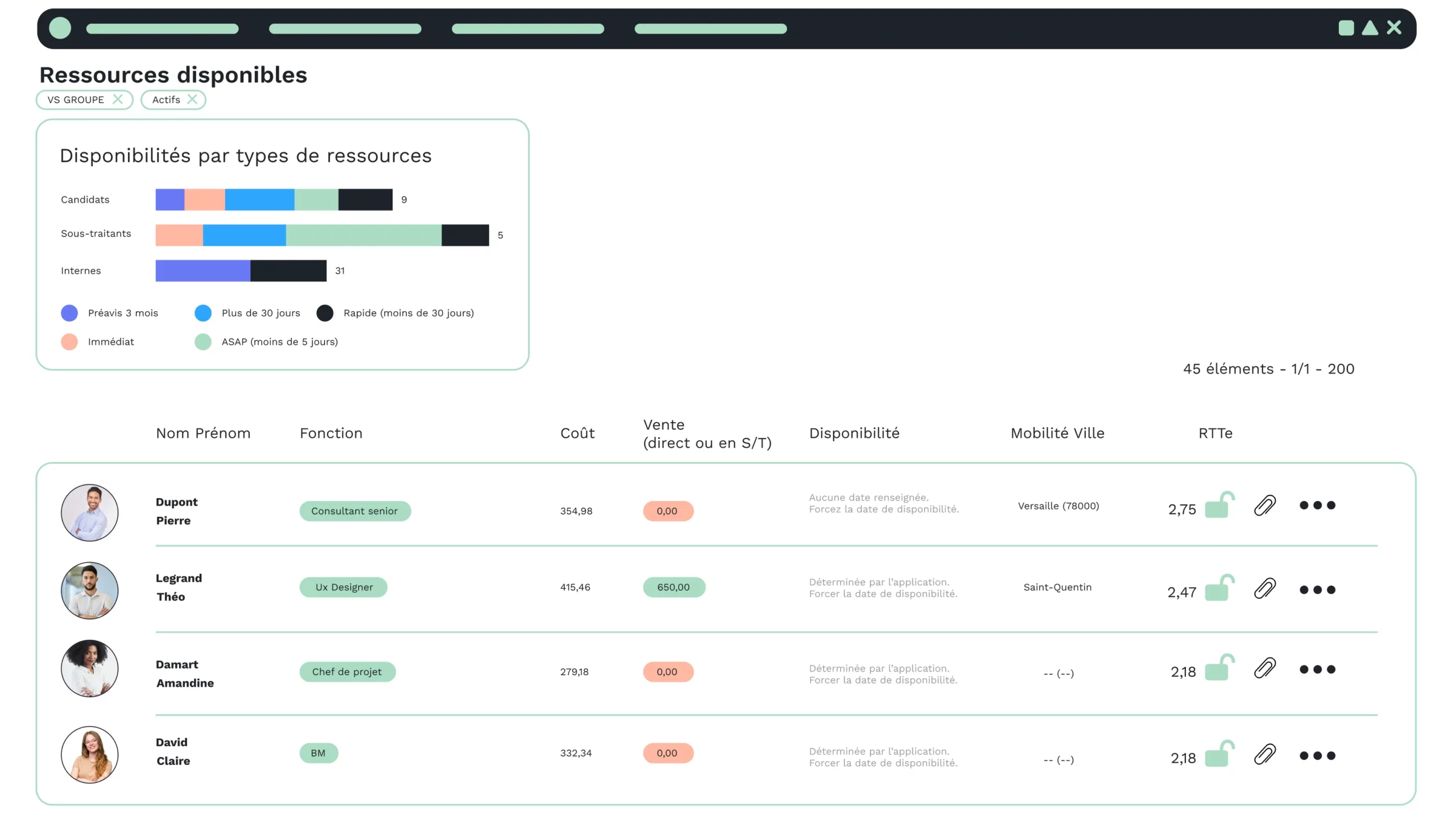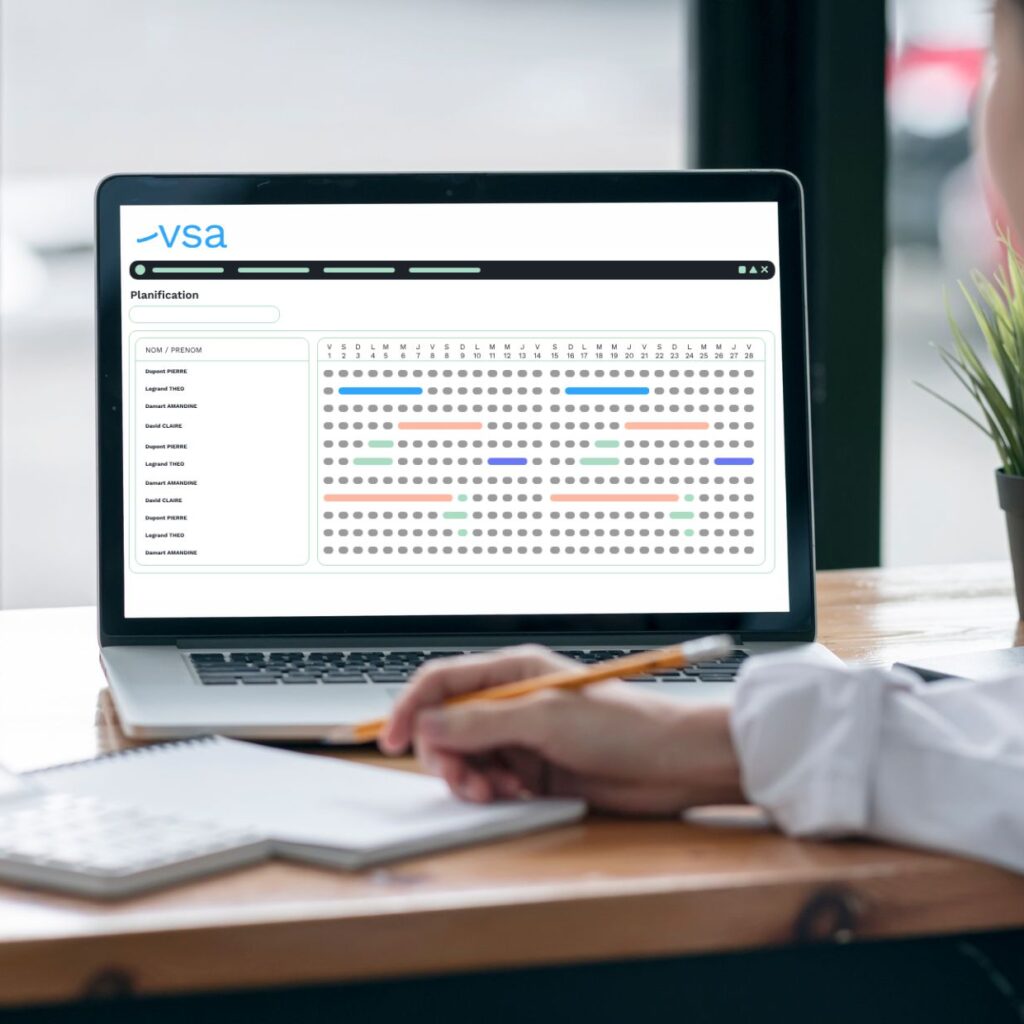


A general-purpose ERP system often covers all of a company’s needs. However, in the case of an umbrella company, the business requirements are too specific to rely on a general-purpose tool. Here’s why, and what that means in practical terms on a day-to-day basis.
When setting up an umbrella company, many executives choose to manage their business using Excel spreadsheets: tracking assignments, tracking employees’ timesheets, client invoicing, financial management, and more…
For the first few weeks, it works. At least, on the surface. But such a system quickly reveals its limitations: data entry errors, manual follow-ups, and scattered data.
This is exactly when the question of tools comes up: Should we invest in an ERP system specifically designed for umbrella employment or can we rely on a general-purpose tool to meet our needs?
What Umbrella Employment Really Requires from Management Software
To properly compare the various tools, it is first necessary to understand that umbrella employment is a tripartite model involving the umbrella company, the employee, and the client. This activity is governed by Ordinance No. 2015-380 of April 2, 2015, and the national collective bargaining agreement for umbrella employment (IDCC 3219). It is precisely this legal framework that sets it apart from the management of an IT services company, a consulting firm, or an agency.
The activity account for the contractor
This is the key document governing the relationship between the umbrella company and its contractor. It must be submitted monthly and track in real time the revenue collected, management fees deducted, business expenses reimbursed, the financial reserve set aside, and the salary paid. No general-purpose payroll software natively supports this document. See our comprehensive guide for more information on the activity account for umbrella employment.
Management Fees
Management fees (generally between 8% and 12% of revenue excluding tax) are deducted by the umbrella company from the contractor’s revenue before calculating the contractor’s salary. This calculation must take into account the structure of the contract, any caps, and the options chosen by the contractor (financial reserve, health insurance, retirement plan). This is a business-specific calculation that general-purpose ERP systems do not include.
Management of Employment Contracts (Permanent and Fixed-Term Contracts Under an Employment Agency)
The collective bargaining agreement for umbrella employment distinguishes between permanent contracts and fixed-term contracts, with specific rules for each (maximum duration, severance pay). A general-purpose ERP system manages standard employment contracts but is not suited to the specific characteristics of umbrella employment contracts and the associated calculation rules.
Ongoing Regulatory Compliance
Umbrella companies are subject to strict legal requirements: proof of financial guarantee, registration with DIRECCTE, DSN compliance, electronic invoicing via an Approved Platform. These requirements change regularly, and specialized software incorporates them as regulations are updated, whereas a general-purpose tool leaves it up to you to monitor these changes on your own.
In summary: what the port requires natively
- An activity report module that is generated automatically and sent to the contractor on a monthly basis.
- A system for calculating brokerage commissions integrated into the billing and payroll process.
- Management of permanent and fixed-term contracts under an umbrella company in accordance with collective agreement IDCC 3219.
- Traceability of the financial reserves established for each contractor.
- Regulatory compliance kept up to date (SDN, electronic billing, financial guarantee).
General-Purpose ERP: 5 Practical Limitations for an Umbrella Company
General-purpose ERP systems—whether Odoo, Sage, Cegid, or similar solutions—are excellent tools in their respective fields. They handle accounting, standard payroll, and traditional invoicing very well. The problem isn’t their quality; it’s their scope: they aren’t designed for umbrella employment. And using one of these ERP systems to manage umbrella employment requires workarounds that are costly in terms of time and reliability.
Limit 1 – No Activity Account Module
The contractor’s activity account does not exist in a general-purpose ERP system. Some organizations create it as an Excel spreadsheet that is consolidated monthly using exports from their payroll software. Others develop a custom module, with the associated development and maintenance costs. In both cases, It takes time and carries a risk of error that management should have eliminated.
The same issue arises with the financial reserve. This mechanism is specific to umbrella employment, where an amount—typically between 5 and 10 percent—is deducted from the contractor’s revenue, replenished each month, and either returned at the end of the contract or used to smooth out earnings during slow months. In a general-purpose ERP system, there is no “financial reserve” field or associated automatic calculation rule. The umbrella company must therefore manage this in a separate file, which carries the risk of inconsistencies between the amounts shown to the employee and those actually set aside.
Limit 2 – Non-native commission calculation
In a general-purpose ERP system, there is no “management fees” field, nor is there a feature to automatically calculate salary based on gross revenue minus commissions. You must configure calculation rules manually, update them whenever a contract changes, and verify each month that they are applied correctly. One configuration error, and dozens of contractors end up with incorrect pay stubs.
Constraint 3 – Non-integrated billing-to-payroll chain
In the umbrella employment model, customer invoices are directly used to calculate the contractor’s payroll. In a general-purpose ERP system, these two processes are often housed in separate modules with no automatic link between them. As a result, manual data entry is required between the receipt of the customer’s payment and the initiation of the payroll calculation, along with the discrepancies and errors that result from this. To learn how to automate this workflow, check out our article on Optimizing Billing for Umbrella Employment.
Limit 4 – Business reporting to be developed
The metrics needed by an umbrella company are not the same as those for a standard SME: active client ratio, average financial reserves, payment terms per client, revenue growth per client, and umbrella company net of management fees. In a general-purpose ERP system, these dashboards do not exist: they must be built using SQL queries or BI exports. In a specialized ERP system, They’re available with just one click.
Limit 5 – No system for managing assignments for contractors
Within an umbrella company, a contractor may have several simultaneous assignments with different clients, each with distinct daily rates and schedules. Each assignment generates its own cycle: timesheets’ entry, client invoicing, and updating the activity account. A general-purpose ERP system does not support this level of granularity.
In practical terms, this raises several problems:
- The status of each assignment (in progress, completed, pending renewal, pending signature) must be tracked manually
- Electronic signatures for assignment contracts and umbrella company agreements are not integrated, which lengthens processing times and increases the number of email exchanges.
- There is no dedicated pipeline for tracking candidates for umbrella employment.
Conversely, in an ERP system specialized in contract work, assignment management is built right in: from proposing an assignment to the contractor to archiving the signed contract, including activity reports’ approval and the automatic triggering of client invoicing.
The True Cost of Bypasses
|
What a Specialized ERP for Umbrella Companies Does Differently
An ERP system designed specifically for umbrella companies operates on the opposite premise: instead of adapting a general-purpose tool to the constraints of umbrella employment, it is designed around the specific business needs of these companies.
The complete business process in a single tool
From sales prospecting to issuing pay stubs, including signing the umbrella company contract, filing with the activity report, client invoicing, and payroll processing —everything flows seamlessly within the same system, without the need for re-entry or manual integration between separate tools.
The automatically generated activity report
With each monthly cycle, the activity account for each contractor is automatically generated based on billing, payroll, and expense data. It is accessible in real time in the contractor’s personal dashboard, via a mobile app or a web portal, without any back-office intervention.
Commissions deducted at the source
Management fees are applied automatically based on the terms of each contractor’s agreement. Salary calculations are based directly on net revenue (after commissions), with no intermediate steps. These settings can be modified on a per-contract basis without affecting the entire database.
Regulatory compliance built into updates
Collective Agreement IDCC 3219, SDN, electronic invoicing: regulatory changes are incorporated into software updates. The umbrella company does not need to monitor legal developments to adjust its settings. The software publisher handles these updates.
A seamless experience for the contractor
Contractors can access their activity accounts from their smartphones, enter their activity reports and expenses, and view the status of their invoices and payments. This autonomy reduces the workload on the back office and improves satisfaction, which directly contributes to contract worker retention.
Comparison Chart: General-Purpose ERP vs. Specialized ERP for App Development
|
Functionality |
General-Purpose ERP |
Specialized ERP for umbrella employment |
|---|---|---|
|
Activity account for the contractor |
To be built or developed |
Native, automatically generated |
|
Calculation of Commissions |
Manual Configuration Required |
Native, configurable by contract |
|
Financial Reserve of the Contractor |
Attached file, manual calculation |
Calculated and provisioned automatically |
|
Management of Permanent and Fixed-Term Contracts Under an Umbrella Company |
Standard, does not comply with IDCC 3219 |
In accordance with the collective bargaining agreement for temporary staffing |
|
Integrated Billing and Payroll System |
Separate modules, manual link |
Automatic, no need to re-enter |
|
Assignment Management (multi-assignments, activity reports, status tracking, signature) |
A repurposed CRM or a spreadsheet |
Natif: From Quote to Signed Contract |
|
Portal and mobile app for the wearer |
Does not exist or needs to be developed |
Included |
|
Business Reporting |
To be built in BI or SQL |
Pre-designed dashboards |
|
Regulatory Update |
Paid by the company |
Provided by the publisher |
|
Deployment timeline |
Long (setup + development) |
Short. Ready to use for carrying |
How to Choose an ERP System for Umbrella Employment: 5 Key Criteria
Once you’ve decided to use a specialized tool, you still need to choose the right one. Here are the five criteria that should guide your evaluation.
Criterion 1 – Regulatory Compliance with Umbrella Employment
Verify that the ERP system covers the specific requirements of collective agreement IDCC 3219: management of permanent and fixed-term contracts under the umbrella company model, calculation of end-of-contract severance pay, tracking of financial reserves, and certification of financial guarantees. Software that has not been updated to address these issues exposes you to legal risks.
Criterion 2 – Native management of activity accounts
This is the most important criterion. The activity report must be generated automatically, accessible in real time by the contractor, and consistent with billing and payroll data. Ask for a specific demonstration of this feature during your evaluation.
Criterion 3 – Compliance with Electronic Invoicing Requirements
Starting in September 2026, all businesses will be affected by the electronic invoicing reform. Your ERP system must be Factur-X compliant and connected to a DGFiP-registered Approved Platform, without the need to manage any additional third-party connectors.
Criterion 4 – The Experience of the Contractor
Your contractors are your primary customers. Their experience with your back office directly impacts their loyalty. Evaluate the quality of the mobile app (entering timesheets, submitting expense reports, viewing activity accounts), the ease of use of the portal, and the system’s responsiveness when questions arise.
Criterion 5 – Data Security and Hosting
Your contractors’ payroll data and personal information are sensitive. Make sure the software provider is certified ISO 27001 and that the data is hosted in France.
What to Ask During an ERP Demo for Umbrella Employment
|
Conclusion
The question is not whether a general-purpose ERP system can technically be configured for umbrella employment. The real question is: at what cost, with what risk, and for how long?
Every month spent manually reconciling activity accounts, verifying commission calculations, or managing data exports between your billing software and your payroll software is time your teams aren’t spending on supporting your contractors and growing the umbrella company’s business.
An ERP system designed for umbrella employment eliminates these challenges from day one. To learn more about what this means for your organization, visit our dedicated page: ERP for umbrella companies.
VSPortage, the ERP system designed for umbrella companies
VSPortage covers the entire management cycle of an umbrella company: from business development to payroll processing, including the management of contracts, real-time activity accounts, electronic invoicing via an Approved Platform, and payroll preparation. ISO 27001 certified, hosted in France, IDCC 3219 compliant.
FAQ
What is the difference between a general-purpose ERP system and an ERP system designed specifically for umbrella employment?
A general-purpose ERP system covers the processes common to most businesses: accounting, invoicing, and standard HR management. An ERP system dedicated to umbrella companies natively integrates the specific business requirements of the umbrella employment: the contractor’s activity account, calculation of commissions, management of permanent and fixed-term umbrella contracts in accordance with collective agreement IDCC 3219, and an automated invoicing–payroll workflow. These features are not available in a general-purpose ERP system. They must therefore be developed or managed manually.
Can a general-purpose ERP system be used to manage an umbrella company?
Technically, yes—with specific customizations or manual workarounds. In practice, this results in manually generated activity reports, commission calculations with fragile configurations, and a non-integrated billing–payroll workflow. Very quickly, this setup becomes a source of administrative overhead and errors. The question isn’t whether it’s possible, but whether it’s sustainable at scale.
When should you switch from Excel to an ERP system to manage your software outsourcing business?
The tipping point usually occurs when there are around 10 to 15 active contractors. Once this threshold is reached, manually reconciling activity accounts, tracking commissions, and managing customer follow-ups become full-time tasks. It’s advisable to plan for this transition before reaching this threshold, as data migration and team training take time. If you’re starting your own umbrella company, consider implementing a specialized ERP system from the very beginning. The immediate gains in operational efficiency will allow you to scale more easily.
How much does an ERP system cost for an umbrella company?
The cost varies depending on the provider, the number of employees under the umbrella company, and the modules selected. As a general guide, VSPortage charges €4.50 per employee under the umbrella company per month, and €45 per manager per month. For an umbrella company with 100 employees under the employment arrangement and 5 managers, the subscription costs €675 per month, or €8,100 per year. This should be compared to the cost of HR time spent on manual management and the risks of regulatory non-compliance.
What is the activity account in an ERP system for umbrella companies, and why is it mandatory?
The activity statement is a mandatory monthly document that the umbrella company must provide to each employee under its management. It details the revenue collected, the management fees deducted, the business expenses reimbursed, the financial reserve set aside, and the corresponding gross salary. This requirement is established by Ordinance No. 2015-380 and Collective Agreement IDCC 3219. In a specialized payroll service platform, this document is generated automatically at the end of each cycle and is accessible in real time in the contractor’s account.