

Reading time: 5 minutes
A contractor employed through an umbrella company is not an employee of your umbrella company in the traditional sense: they can switch companies almost as easily as a client switches suppliers. Their loyalty is built on the quality of service they experience on a daily basis. This is what makes employee retention a management issue in its own right for an umbrella company—not just an HR issue.
Why Customer Loyalty Is a Direct Factor in Profitability
Every contractor under an umbrella company who leaves your umbrella company for another one represents turnover that disappears overnight.
And it takes additional commercial effort to replace it.
When applied to your portfolio, the share of active contractors—as detailed in our article on financial management for an umbrella company —depends directly on your ability to retain contractors who are already on staff, not just on recruiting new ones.
Unlike a traditional employee, a contractor employed through an umbrella company faces few obstacles when switching to a different umbrella company: no mandatory notice period, no significant loss of seniority, and administrative paperwork that needs to be completed but is rarely complex.
Customer loyalty must therefore be actively built, one step at a time.
In reality, building loyalty begins in the very first weeks: a contractor whose administrative onboarding (enrollment paperwork, first activity report filing, first invoice) goes smoothly will leave with a positive impression of your umbrella company, which determines their receptiveness to the strategies described below over the long term.
Practical Strategies for Building Customer Loyalty in the Umbrella Employment Industry
Administrative Simplicity in Everyday Life
This is often the main reason why a consultant chooses umbrella employment: to delegate administrative tasks so they can focus on their business.
If, once signed, this promise is met with time-consuming activity reports to fill out, expense claims that must be re-entered manually, or repeated follow-ups from your administrator, the perceived value of the outsourcing arrangement quickly erodes.
A streamlined process remains one of the most practical and quickest solutions to implement: mobile data entry, rapid validation, and minimizing back-and-forth communication.
Financial Transparency
A contractor thinks like a business owner when it comes to his own turnover: he wants to know at all times his current invoiced amounts, the management fees deducted, his accumulated financial reserves, and the status of his accounts receivable.
A clear and always-accessible activity account transforms the relationship: the contractor no longer needs to reach out to your team to get information that they should be able to view on their own.
Speed of payment processing
The time between the end of a billed assignment and the payment of the corresponding salary is closely monitored by consultants employed through agencies, particularly those who rely on this income for their personal cash flow.
A slow invoicing process on the client’s end directly impacts this timeline. This is precisely what links this customer retention strategy to DSO, as we detail in our article on the financial management of an umbrella company: the more reliable and timely your invoicing is, the more likely your contractors are to be paid within predictable timeframes.
Personalized Support
The digitization of administrative tasks should not lead to the loss of human contact. A designated manager who is reachable and responsive to issues that fall outside the standard scope (disputes with customers, questions about contracts, sick leave) remains a key factor in building customer loyalty—one that tools alone cannot replace. On the contrary, these tools should free up time for such support by automating whatever can be automated.
Networking and a Sense of Belonging
An independent consultant who chooses umbrella employement often finds themselves isolated in their day-to-day professional practice. Simple initiatives create a sense of belonging to a community rather than just an administrative structure: connecting contractors with one another, organizing events, sharing assignment opportunities… This is a key differentiator that goes far beyond the management fee rate alone.
The role of digital tools in leveraging these factors
These levers are, first and foremost, choices regarding organization and approach toward those being supported.
But if the tool isn’t right for the job, these goals may be unattainable in practice.
For example, a team that spends most of its time re-entering data into multiple files automatically has less time for personal support.
Or, an activity account that is updated manually once a month cannot provide the real-time transparency that contractors expect.
|
Lever |
Without a centralized tool |
With a dedicated ERP system |
|
Administrative Simplicity |
Activity report and fees sent via email or file; manual follow-ups |
Self-service mobile data entry, quick validation |
|
Financial Transparency |
Monthly Newsletter Discovered After the Fact |
Activity Report Available for Viewing at Any Time |
|
Prompt Payment |
Customer delay detected late, often by the contractor itself |
Invoice tracking that provides early warnings of late payments |
|
Personalized Support |
Time spent by managers on re-entering data and following up |
Time set aside for topics that fall outside the standard framework |
An ERP system designed specifically for umbrella employement makes it possible to implement these strategies at scale. For a small portfolio of a few contractors, a hands-on approach may suffice, but beyond that, it becomes the main obstacle to consistent client retention.
Measuring Customer Loyalty
Two indicators are sufficient to objectively assess the long-term effectiveness of these measures:
- the year-over-year retention rate of new customers
- their average length of service with your umbrella company.
When tracked in conjunction with the share of active contractors described in our article on financial management, these metrics make it possible to verify whether customer retention efforts are paying off, rather than relying on an unmeasured qualitative impression.
Frequently Asked Questions
What is the fastest way to build customer loyalty?
Financial transparency through an activity report that is accessible at all times. Unlike human support or networking—which take time to build—this approach relies primarily on the tools already in place and can often be improved quickly.
Does contractor retention depend solely on the management fee rate?
No. The management fee rate is the most important factor when initially choosing an umbrella company. Once the contractor is on the job, the quality of service experienced on a day-to-day basis (administrative simplicity, transparency, responsiveness) carries at least as much weight—if not more—in their decision to stay.
How can I tell if my customer retention efforts are effective?
By tracking the retention rate and average tenure of your contract workers over time, rather than relying on a one-time impression. A gradual decline in these metrics—even a slight one—is worth investigating before it becomes significant.
VSPortage: Tools That Make Customer Retention Possible at Scale
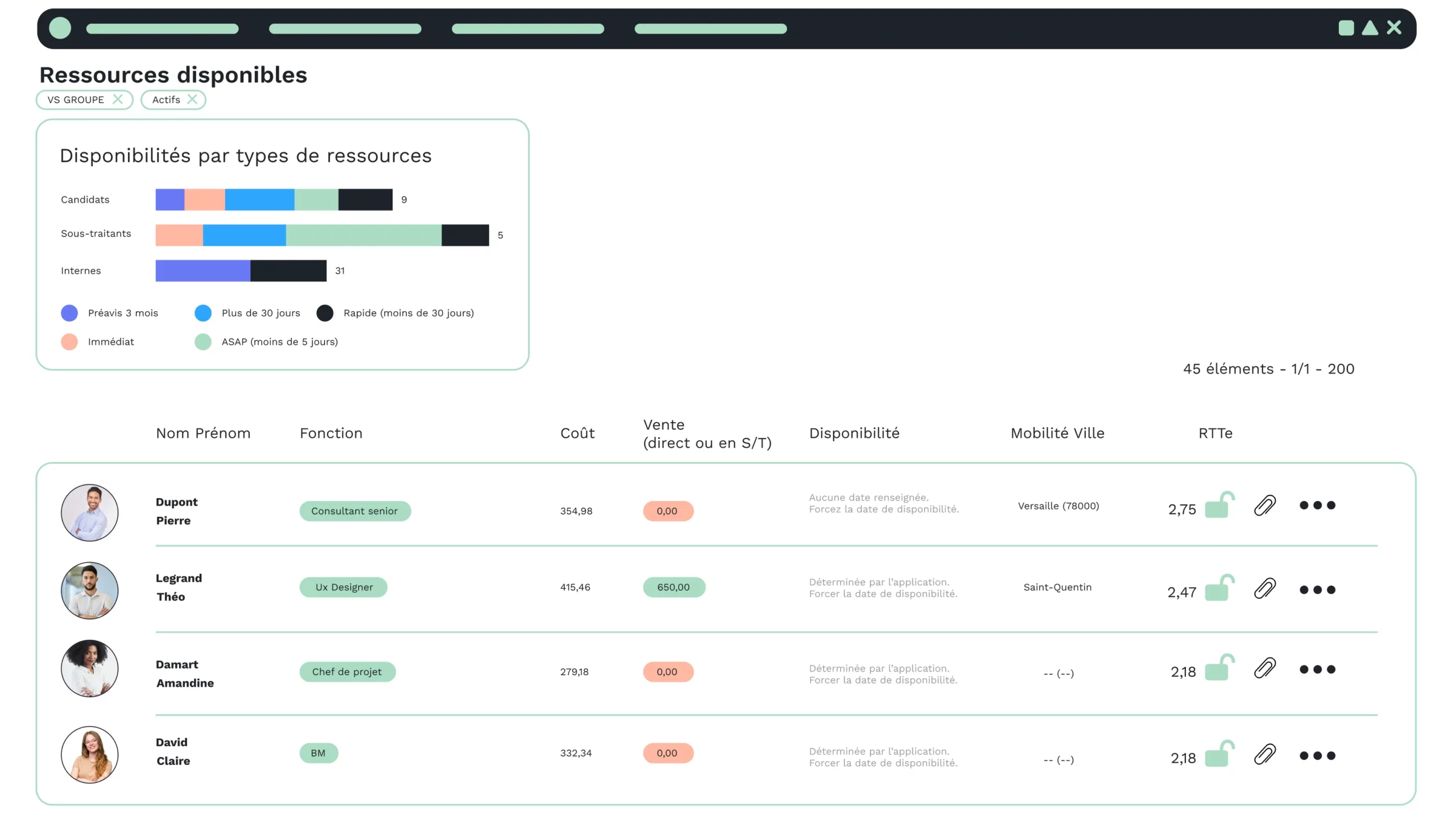
VSPortage gives each child A real-time activity account and an app for mobile entry of activity data and expenses. At the same time, your team gains a consolidated view of billing and payment terms, as well as the ability to track cases, allowing them to spend more time providing support and less time re-entering data.